
War on the Northern Border
What price deterrence?
He is a very old man now. Increasingly, on his daily walks up the hill, he feels his age. The tapping of his stick is loud on the metalled roads of the town. Suddenly breathless, he pauses to rest, pulls himself erect. He lets the stick take his weight, right elbow locked, handle wedged comfortably against the top of his thigh. The walk up from his small house has tired him. With his free hand he lifts the battered trilby he wears and with it scratches the side of his head. The hat makes his head sweat, aggravates the raised weal of the scar there.
Idly, his gaze drifts across the familiar yellow and white houses, their red-tiled roofs shining in the sun, reaching out between the spruce and palm trees towards the broad valley beyond. A flock of cranes flaps slowly across his view. Below them, green and brown swathes of land roll gently away, rising to meet drifts of thin clouds clinging lightly to the Lebanese hills. In the distance, the great bulk of Mount Hermon rises white with snow.
From the corner of his eye he sees movement, turns to watch. A convoy of armoured personnel carriers races along the road which clings to the brow of the hill, disappearing amid a cloud of dust towards the ravine with its waterfalls and peacefully meandering river. He hates to see the army, his army, running like rats. He wonders when his country lost the angry creativeness of the victories wrested from the massed ranks of its Arab neighbours.
Some distance away, soldiers in body armour, helmets loosely draped with netting, loiter by their vehicles in the cover provided by a high wall. There are hundreds of soldiers in the deserted town now. They arrived when the government implemented its evacuation of the northern Kibbutzesi. Up to 120,000 people have been displaced, or so his newspaper tells him. They infest the town, lolling at the tables of abandoned cafés, bored, waiting for orders, itching to attack. They have many times tried and failed to dissuade him, warning him of the risks with worried glances at his stick and exaggerated descriptions. But he is an old soldier, a veteran of many battles on behalf of this land he loves. He understands the risks, knows how to move in cover. They ignore him now, and he continues his daily visits.
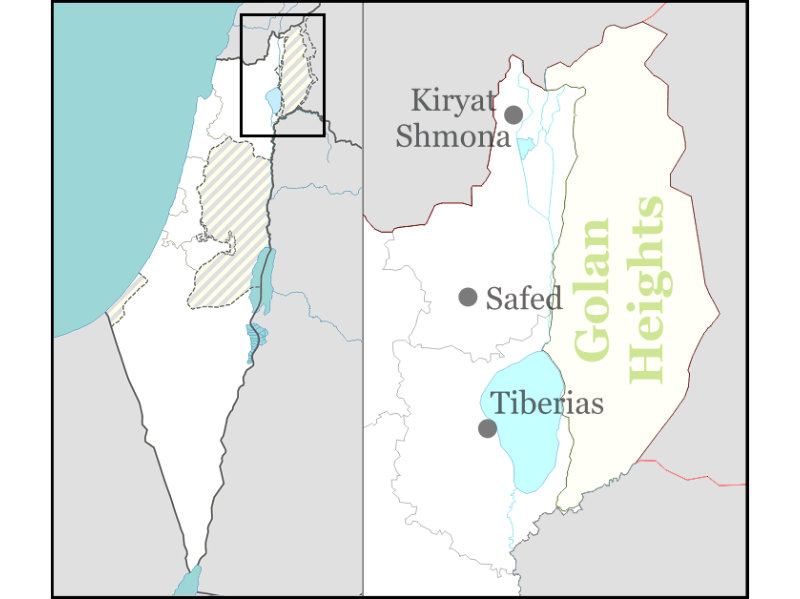
A grey cat glowers at him from its vantage point atop a pile of plastic-clad sandbags. In the narrow street beyond it, the blackened wreck of a burnt-out vehicle broods in front of a destroyed house, a malevolent reminder of the risks. The missiles hit the house last weekii, even though the occupants had left weeks before. Apparently, it was a response to the death of the mayor of one of the villages across the border. He knows of the village; it is barely five miles from Metula. Within easy range of the big guns. He wonders why the mayor stayed when the others had leftiii. He eyes the cat in sympathy. It too cannot bring itself to leave. The town is besieged by scavenging dogs and cats, the pets people were unable to take with them in the early rush of the evacuation. He makes a mental note. Tonight he will leave something out for them from his meagre supplies.
He understands why they have left, the youngsters. And the recent arrivals from the war in Ukraine. For them, he has a particular sympathy. He too was once a refugee from war. Now they are holed up in crowded hotels in Tiberias and other southern towns, out of harm’s way, worrying about their livelihoods, how they will afford extended stays in expensive hotels, how they will rebuild their destroyed homes. Whether it is even worth the effort.
THe knows their worry; they no longer trust in the deterrence on which they have all relied for so long. The risk to their children from the random sniper fire and indiscriminate rockets. And especially now the new fear: fear of a ground invasion, or a midnight attack by Hezbollah’s feared Radwan forces1.
It was the rockets which drove them away. But it is the fear of an attack like the one in the south which will prevent them from returning.
He frowns. He cannot understand how the attacks have been allowed to happen. His once sky-high faith in the army – and in his countrymen – is shattered. Ten hours before soldiers came to defend the Kibbutzes in the south! Ten hours! And where were the menfolk in all that time? What did they do to protect their families? What happened to the old days, when the Kibbutzes were full of young men armed with Uzi sub-machine guns? He shakes his head with irritation.
A puff of grey-white smoke bellies upwards from a nearby hill. A second or so later he hears the crump of an explosion. He nods to himself; they are using bigger and better weapons now, taking more time to choose their targets. Gone are the days when either side fired on what proved to be empty fields. He turns to watch, waiting for the response he knows will come. Minutes later, as his old eyes scan the hillside opposite, he hears the answering sound of the Israeli heavy artillery. A close packed salvo of detonations, the reverberations pummelling his ear drums. He squints. Seconds later he sees the explosions on the hillside beyond the snaking white concrete of the boundary wall. Voluminous clouds of smoke rise heavenwards. He grins happily, always more, always heavier.
The old man mulls the view. He remembers the first time he saw it, exhausted and half-starved from the journey. At 100 years of age, he was born after the pogroms back in Ukraine. But he has read of them since, knows of the senseless brutality his own parents somehow survived. The rape and murder of the Jewish shopkeepers and townsfolk of Kiev. And the hardships which came afterwards for the survivors, forced to scavenge on the streets of Kiev where once they had been members of the wealthy middle class. This country has been good to him. He owes Israel a debt. One he tries daily to repay.
Wearily he resumes his walk, bent against the slight hill. His father was fortunate to find a place in a Kibbutz here, right at the beginning. The family smuggled in from the north by taciturn, bearded men from the Hashomer2 intent on expanding the Jewish population irrespective of the British restrictions on immigration. He still remembers the early years, the back-breaking labour which transformed the barren land into today’s flourishing paradise. The to-and-fro of the battles with angry, gesticulating Arabs.
He toils onwards. The sun is higher now. In the distance, the rattle of machine gun fire, the heavier reports of artillery. Since Hamas’ attacks in the south, this is commonplace. His brain registers it, pays no heed.
He has reached his objective. He realises he is panting, struggling to force air into his old lungs fast enough to satisfy the demands he is making of his body. A mild sense of panic starts to rise. Each day the walk seems to take longer, the effort he must make is greater. He forces himself to breathe, feels his heart rate slowing, the panic receding.
The monument of Yad Labanim stands before him. He contemplates it for a moment. Still, despite his daily visits, its presence inspires a wave of melancholy. He takes a breath, lowers his head determinedly. Awkwardly he starts up the low flight of steps to the circular cobbled terrace with its view towards a tree-clad hillside. Short white walls jut skywards from its perimeter like irregular teeth. A banked panel circles the central dais. A central section contains a few commemorative words to the fallen. Off-centre in front of it, a small iron container is intended to contain the eternal flame.
He reaches the dais; stands in silence for a moment. Then, respectfully, he approaches the container, scrabbling with his free hand in a pocket for matches and a candle. Painfully he bends, extracts yesterday’s candle, tosses it away, balances a fresh replacement. He rests his stick on the cobbled ground to free both hands, fumbles with the matches in the shelter of the iron rim, out of reach of the gentle breeze ruffling the surrounding tree branches. The match lights, gutters weakly, fails. He strikes again, cursing the pain in his back with the voluble Ukrainian of his youth. The tiny flame holds this time, gains strength. Just long enough to coax a flame from the candle. He stares at it for a moment while it settles. Then stiffly he straightens, tosses the smouldering match, regains the security of his stick.
Slowly, the old soldier removes his hat, draws himself up, the closest he can come these days to the posture of attention. As he stares at the weak flicker of the candle his thoughts patrol the past. His mind’s eye sees the exhausted, filthy faces of his former companions. They are dancing the Horah3; celebrating a great victory, their arms linked, figures bobbing up and down exuberantly to the rhythm of traditional music, bearded faces wreathed in smiles. His face softens at the memory; his tank crew after the War of ’67. Six days of ferocious battles, the restless formations of Israeli Centurion tanks moving at lightning speed, attacks flaring like matchheads in their ferocity. And then the sudden collapse of the enemy, like falling cards. Out-fought despite their vast numerical superiority. Such a victory.
His brow clouds. The 1973 Yom Kippur War, though, was a lucky escape. His country caught on the hop, blinded by its determined religious observation. Hastily mobilised to counter the new threat, he finds himself commanding a new US M60 Patton tank, its crew barely trained on the new equipment. In the Sinai desert, he is lucky to escape the direct hit. Flung by the force of the explosion a dozen yards from the turret in which he was perched. Regaining consciousness to the smell of burning flesh and flames crackling from the destroyed tank, small arms ammunition going off like fireworks in the heat. His crew…his beloved crew, consumed by fire in a tank too twisted to leave. A sacrifice justified only by victory. His eyes moisten at the memory. He struggles these days to remember their faces. It makes him feel guilty. His guilt nurtures his hatred, refuses to let it age and soften. Absently he lifts his hand to scratch at the scar.
He trudges over to one of the walls, settles against it, taking the weight off his weary legs. He knows he is out of sight of the enemy’s weapons. His breath comes shorter now, shorter than it used to when he first started to visit the monument. In those days, Metula was a statement of Israel’s success; bravely, proudly succeeding despite threats from three sides. It was a safe place to live, somewhere to holiday for Israelis tired of the heat of the south. Its farms thrived in the fertile valleys of Metula. Few worried about the threat from Lebanon.
He leans back, stares blankly at the cobbled ground. It was only when Iran started to meddle, sometime around the war with Lebanese Hezbollah in 2006 that things changed direction. That war was much more painful than it should have been, the old man ruminates, that was when deterrence failed – and when they should have administered the slap.
“We were too weak…” he mutters out loud. The faces in his mind nod their agreement. “…and now we are cornered.” The faces cloud and vanish, leaving him alone with his thoughts. Hezbollah could easily invade, he ruminates. Up on Mount Dov, the border is not even fenced. How many lives would they take before the army had time to react? He shudders slightly. It is time, he is certain. Too much time has passed without a war. Another generation must now pay the price required for the rights to the Promised Land.
In the distance, the shooting has stopped. He sighs, knows it is only a brief respite before the resumes in the evening. He cannot remember the last time he had a full night’s sleep. He has been here long enough. He stands, takes one last lingering look. He wonders briefly how many more times he will be able to enjoy this view before it is time to join the ghosts of his past. He sighs, turns and begins to retrace his steps. He has the cats to feed.
So What?
Deterrence is no longer in force along the northern border. Indeed, it was teetering before 7 October 2023. Without adequate deterrence, Israelis are no longer safe and at some level this removes the foundation of their country’s existence.
Which begs the question: how will confidence in the safety of Israel for Israelis be restored?
For years, the two sides, with tacit support from the United Nations Interim Force in Lebanon (UNIFIL), have relied on carefully calibrated ‘tit-for-tat’ exchanges across the border by means of which both sides can demonstrate relevance without risking escalation into open, full scale conflict.
But under the shelter of this deterrence, with huge Iranian support, Lebanese Hezbollah has transformed itself into what is now ‘the world’s most heavily armed non-state actor’iv. Its ability to fire more than 4,000 missiles a dayv for a sustained period would quickly overwhelm Israel’s missile defence systems, enabling its huge arsenal of missiles to target exposed infrastructure throughout Israel. The consequences would be existential.
At the same time, Israel’s principal ally, the US, has become a paper tiger in the Middle East. China is looking to fill the vacuum in its absence, as Russia already has. Even the rag-tag Houthis in Yemen are happy to attack US and UK forces and interdict the world’s shipping. Arab nations are left questioning whether allying with Israel will produce sufficient dividends to make opposition to Iran worthwhile.
And then on 7 October 2023, Israel’s sophisticated intelligence capability, its “Iron Wall” border security structures and its powerful army and air force failed to prevent Hamas commandos from attacking its fleshy underbelly. All at once, northern Israelis could see a new threat looming – another bloody ground invasion, this time by Hezbollah’s deadly Radwan forces.
The attacks triggered a major uptick in the exchanges of fire across the northern border; greater complexity, more powerful munitions, new types of targets, increasing depth. The explicit intent was to take lives. Israel’s then Defence Minister Yoav Gallant threatened a ground offensivevi. Foreign Minister Eli Cohen called for the implementation of UN resolution 17014 to avoid regional warvii. Nobody has yet presented a practical or a lasting solution.
The fact is that the balance of power has been overturned to favour Iran and her proxy forces. The military might arrayed against Israel is no longer something to be countered using existing methods. It is therefore unlikely that both sides can coexist in the precarious harmony of the past without a dramatic shift in the facts on the ground.
Israel has its back against the wall, surrounded by a stream of outspoken threats of annihilation. It is a nation which has time and again defeated more numerous and stronger foes, has an unshakable belief in its armed forces, a nuclear capability and an implacable determination to survive. And it has nowhere else to go.
Ask yourself: What would you do?
Yours sincerely,