
Dawn in southern Israel. Flat desert light warms the scrubby sand of the Negev desert. A breeze ruffles the branches of the acacia trees shading the low-lying buildings dotted around. The Kibbutz community slumbers peacefully, secure in unquestioning confidence in the power of Israel’s army to protect it, to deliver on the promise of Zionism1.
At just 20 years old, the young man has lived his whole life dreaming of freedom. Freedom from the Israeli oppressor. Today he will strike a blow for this dream, for Palestine. Today it is his turn to kill. He smiles. It makes him happy.
From the euphoric breaching of the Gaza border fence, that symbol of imperial disdain, through the journey on the pillion of a motorcycle, he and the other young fighters have radiated unalloyed glee. Excited shouts of “Allahu Akhbar” break out amid scenes of jubilation. Amongst the raised Kalashnikovs and the figures clad in military webbing pulled over t-shirts and cargo pants, there is none of the calm deliberation of professional soldiers. Rather the loud exuberance of boys at play.
His first kill is a dog. A large black dog, silver muzzled and no longer in the first flush of youth. It gambols towards him, tongue lolling, friendliness in its manner, blind to the threat of the rifle he levels at it. He kills it out of curiosity. A reflex action requiring barely a thought. The execution and the innocent animal’s convulsions embolden him.
His eyes dart left and right, taking in the unfamiliar surroundings. The simple trip is an experience most Gazans have been denied since 1994, when work on the “Iron Wall”2 commenced.
Close by there is shouting, a woman screams. A handful of shots are fired and, abruptly, the screams cease. Suddenly, dogs begin to bark, frantic with excitement.
Stiff with tension, rifle pressed to his shoulder, he steps cautiously around the compound, peering through the slats of a window blind, looking for targets. The building reminds him of the mock-ups on which he has practiced for this day. The kibbutz seems to have no guard, no defensive weapons, nothing to indicate this is anything more than a quiet family home. Such is the unthinking confidence Israelis have in their army. Inside, a father in his underwear, alerted by the sound of gunfire, is hurrying his two boys from their beds. They are perhaps 10 and 12. He hastens them, bleary with sleep, into a small outbuilding, urging them to silence.
A security camera picks up the intruder as he approaches the outbuilding. Almost casually, he rolls a grenade through the open door. Steps back to avoid the blast. Seconds later the father’s body collapses to the ground, his upper body visible in the doorway. The young Palestinian fires at it, casually aims a kick at the body’s head, checking for signs of life. He herds the two boys back into the house, mindful that his orders are to capture hostages. Their movements are erratic, unsure of direction or coordination, as if their limbs are disconnected from their bodies, their eyes glazed with shock. The younger has his thumb thrust firmly between his lips.
From the fridge the man takes a bottle and gulps the water down. He grins at the boys, gives them an excited thumbs-up. His euphoria is palpable, inhuman. The boys, wide eyed, look on in horrified silence.
He sees a mobile phone lying on the kitchen top. He stares at it for a moment, releases his rifle to hang from the clip on his shoulder to which it is attached and carefully picks it up. He turns it this way and that, taps the screen. The phone springs to life, a picture of two small boys in a swimming pool fills the screen. In front of it are a series of tiny icons. It is unlocked. He smiles, taps at the screen, dials a number, holds the device to his ear. A moment later his father answers. There is glee in the young man’s voice. He almost screams into the receiver, delighting in his kills, demanding he speak to his mother.
Much later, after days on the run with no food and little water he ponders that call. From the stinking confines of a crowded Israeli prison cell, hungry and in pain from the hours of rough-handed interrogations and the discreet kicks of his enraged and vengeful captors, he wonders how his life came to such a pass. The measured words of the interrogators ring in his mind; from the Surah al Maidah, the chapter revealed to Mohammed in Medina. “Whoever takes a life, it will be as if they have killed all of humanity.” The Holy Book’s renunciation of all that he has done. He asks himself why he was never taught these things; never given to understand the gravity of his crime.
He ponders the balance between Hamas’ infamous victory on that day and the bombs his captors are raining down on Gaza. He worries about his family, whether his parents, his brother and sisters are alive. He thinks they are almost certainly dead; knows the Israeli protocols on the families of those whom they describe as “terrorists”. He prays that their deaths were painless.
His eyes fill with angry tears. He wipes at them furiously with a grubby forearm, trying and failing to satisfy his searching, agonised mind with the consolation that there was, when everything was considered, no other choice.
This is what hatred looks like. Hatred leering unashamedly from gleeful young faces committing gruesome murders. Acts trophy-captured on body cameras. Hatred driving the slaughter of undefended women and children, people whose only crime was Israeli nationality, citizens of a regime Palestinians blame for their impoverished, desperate existence, a life carved from the fringes of survival.
This is a hatred shared by Palestinians across the West Bank, and by those in the diaspora residing in Jordan and Lebanon. They are a people connected by an Arab web of family and clan that runs far deeper than the divided factions that Western media most often report.
But this self-same hatred is also hard-wired into the psyche of today’s Israeli. For decades, rockets from Gaza and from Lebanese Hezbollah have been sending Israelis scurrying for safe rooms, blaring air raid sirens rattling their nerves. In pursuit of deterrence Israeli soldiers have engaged in countless “operations” in which many have lost their lives. During the Second Intifada, between 2000 and 2005, 1,083 Israelis were killed – including 741 civilians, of whom 124 were children – many at the hands of suicide bombers sent by Hamas. Some sources estimate that more than 8,000 Israelis were wounded.
Such attacks continue to this day. The groups responsible for them make no bones about their desire to annihilate the State of Israel. Likewise, the uninterrupted continuation of these assaults has informed and hardened Israeli attitudes to the Palestinians.
In late October 2023, in the tiny Palestinian community of Wadi al Seeq, a group of Israeli settlers and members of the IDF capture and abuse three local farmers. The farmers are stripped, beaten with iron bars, urinated on and sodomised. The abusers film themselves and later publicise their actions on social mediai, adding to numerous similar incidents of abuse and humiliation. Since 7 October, together with a dramatic escalation of IDF raids on West Bank communities, Israeli settlers have accelerated their campaign of hate in the West Bank. With the barely disguised approval and sometimes even support of Benjamin Netanyahu’s government.
The events in Wadi al Seeq perhaps helps to explain a death toll, countenanced by Israel and its Western backers, which has at the time of writing exceeded an extraordinary 72,000ii. Not to mention that, according to the Hamas-run Gazan Health Ministry, as many as 70% of these casualties have been women and children.
It perhaps explains the damage to over 60% of residential buildings in the Gaza Strip (some 132,590 structures) by Israeli bombs since 7 October 2023. Nearly 100,000 structures out of a total 218,656 have been completely destroyed. Leaving over a million people homeless. In Gaza City alone, 34,000 opf 55,000 homes have been destroyed. Nearly half of the Strip’s 969 educational establishments have been destroyed with another 33% damaged. 92% of major roads have been damaged, over half completely destroyed. The UN estimated that some 1.9million Gazans are displaced of a population estimated to be around 2.2 millioniii. The majority find shelter in 156 UNRWA locations across Gaza. Others live in the open, lacking sanitation or fresh water, utterly dependent on the all-too-rare deliveries of aid.
The High rise apartment blocks which used to predominate are no longer habitable. They have been building vertically for decades now. The 25 mile long Strip has little enough land as it is. Adult children build their houses atop their parents’ houses, and their children build above them. In consequence, Israeli bombs have destroyed entire extended families, leaving most of their bodies to rot amidst the rubble, Islamic burial rites having been rendered impossible. Neighbouring countries like Egypt and Jordan have refused to receive those attempting to flee, fearing accusations of complicity with Israel. And for the Palestinians, a significant fear is that of a second Nakba3, the refugees of the first Nakba having never returned. For the remainder, there is nowhere else for them to go.
The mainstream media in Israel pays scant attention to this ongoing humanitarian disaster in Gaza. In political parlance, it simply does not “cut through”.
So What?
Western leaders insist on regarding Israel as similar to itself. They see an educated race of capitalists aligned with their own interests, an attractive ally in a region intrinsic to Western economic security.
But Western leaders are wrong. Israel is a land whose population is composed almost entirely of refugees accustomed to persecution. Zionism, Israel’s founding premise, stands for a place of safety for Jews. Safety bought and paid for in the horrors of the Holocaust and in innumerable conflicts against its neighbours, some of whom remain implacably and vocally committed to Israel’s annihilation.
Israelis compare Hamas’ 7/10 attacks not with 9/11, but with the Holocaust. Well publicised recent polling of West Bank Palestinians showing overwhelming support for Hamas’ actionsiv merely lends weight to their existing mile-high persecution complex. In Israeli minds, Palestinians – men, women and children – represent a genuinely existential threat. They make the possibility that Israel will be rendered uninhabitable to their families and their children very real, even likely. Living under such conditions would simply be too dangerous, and this is something that Israelis, a people for whom survival is the status quo, will resist with all the tenacity, ruthlessness and determination one might expect.
Let us make no bones about it. The objectives of both sides are no longer secret; Hamas seeks to destroy Israel and so Israel seeks to destroy Hamas. Neither side is prepared to trust the other to deliver the romantic goals of the West any longer. The so called “Two State Solution” is dead. It died long ago. Each side’s hatred of the other dictates that only one will survive.
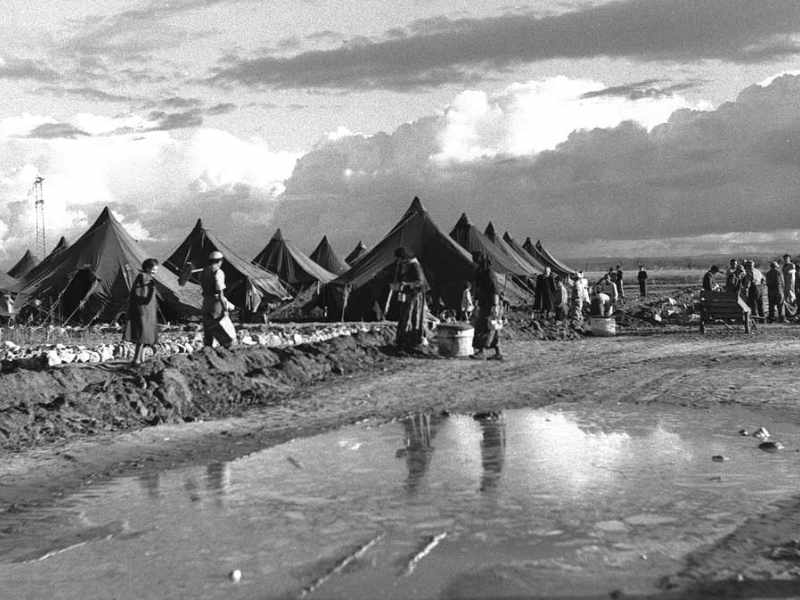
Israeli leaders likely regard their country’s interests to be best served by the displacement of Gazans to tented accommodation in southern Gaza, to be administered and supported by the United Nations and the international community. Many Israeli citizens would applaud such a plan.
Under the guise of eliminating Hamas, the IDF will almost certainly seek to maximise destruction of habitable property and governing facilities to render Palestinian occupation of the Gaza Strip impossible, providing room for manoeuvre for Israeli security forces to re-establish much vaunted deterrence policies.
The real question, though, is whether Israelis will be adequately reassured. And if so, how long before a threat of similar or greater magnitude emerges. In the words of the Afghans, faced with a not altogether dissimilar threat: “You (Israelis) may have the watches, but we (Palestinians), we have the time.”
Yours sincerely,