
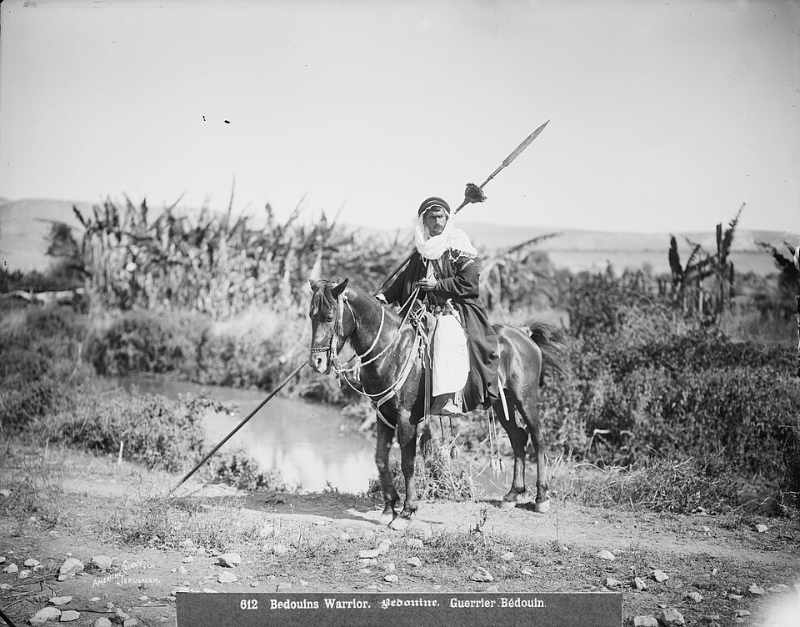
When the West ventures east, it ventures east with all the preconceptions borne of hundreds of years of its own development pathway. It meets, on arrival in the hot and dusty airports of Dubai, of Baghdad, Amman or Beirut, a culture thousands of years in the making, but which has followed an entirely different path. A culture which treats almost everything differently from the way the West has come to expect.
As recently as the 1950’s Bedouin tribesmen still moved by camel from water-hole to water-hole, in groups rarely numbering more than a hundred. They lived in large black tents and squatted in the dust to trade in souks where glittering, modern buildings now tower. These groups survived successfully in the desert, where basic essentials were scarce. Their culture included regular conflict for resources, a deep seated dependence on the group and on the leadership of the Sheikh. Democracy, or freedom of speech was a stranger. We are too often fooled by the modernity bought with the wealth of Arab oil.
Our judgements are too often skewed by our own preconceptions. We misinterpret performance and assume it to demonstrate intent. We fail to imbue our analysis with the cultural understanding which the problem so often represents. Nowhere is this more the case than in the conflict over the State of Israel.
*
Baghdad, Forward Operating Base Union III. 45 degrees of dry heat baking the yellow buildings and their occupants into weary submission. An army officer sits alone waiting for a meeting. The room is furnished with a tatty sofa and a large reproduction desk. Behind it broods a heavily upholstered swivel chair. The desk is adorned with a single, neatly squared pile papers. Against one wall leans a pile of tired-looking boxes. A ceiling fan turns idly above, producing not the faintest whisper of a cooling breeze. There is not a computer in sight.
Through a window, the corner of a dusty courtyard is busy with tiny birds squabbling over a discarded aluminium tray of rice. A mix of soldiers in a variety of camouflages stand in desultory groups smoking and making small talk in shade provided by a straggling palm. A number of Arabs in civilian clothes are engaged in heated debate. He smiles slightly. These are men he works with. He recognises the noisy bluster of their exchanges, knows it for what it is, the Arab way.
A noise outside. A door opens and shuts. The sound of a confident stride and then that of the corporal springing to attention. The officer gets to his feet and stiffens to respectful attention.
Staff Major General Hussein is a small, intense man. He is head of Iraqi military intelligence and a key contact for the coalition of forces supporting Iraq in its battle against the Islamic State in the Levant. The General carries the scars of years of war with Iran, and of the strains of the current battle with Daesh. Now his work seems to consist mostly of shuffling the contents of the daily pile of papers, borne reverently to him by an underling, from one side of his desk to another. But the officer knows from the many hours he has spent in this room that it is on his three mobile telephones that the majority of his real work is conducted.
The General subsides wearily into the chair behind the desk, mutters something to his aide and flaps a hand in dismissal. After a moment he raises his head and regards the young officer through narrowed eyes. Then he lifts a questioning brow. The young officer smiles politely and, in his clumsy Arabic, enquires after the General’s health, the health of his family, and his affairs. The General nods, content that the formalities have been observed.
“Al Hamdulillah”, God be praised. He mutters. “What can I do for you today, Captain?”
“Sayeedee,” his visitor responds, “we need to complete the IPB1 detail for the strike you’ve requested in the Hamrin mountains.”
He pauses, clears his throat. He knows this is a problem for the General, but this is a hand he has played before. He smiles quickly, “I have to ask, Sir, I wonder if you can help out with any more intel on the coordinates you gave me earlier in the week?”
For a moment the General gazes at the young officer. Then he leans forward. In flawless English, he begins to speak.
“Captain, I know that your General wants me to supply him with information for your targeting package.”
He pauses, extracts a cigarette from a packet in the centre drawer of his desk, lights it and inhales deeply. He examines the cigarette for a moment then resumes.
“I know that your lawyers require it. I know that you too...” he smiles slightly, he likes the young officer, “…will continue to…” his brow furrows for a moment as he searches for the English word, “’pursue’ me…” he rolls the word pleasurably around his mouth “for this information.”
There is a long pause, the General contemplates the pile of papers. Then he lifts his head, gazes levelly at the young officer and says:
“I will not give it.”
His visitor starts to speak, but the General cuts him off with another wave of his open hand.
“You and your General must understand.” He leans forward, his dark eyes search the young officer’s face.
“I am a Shi’a Muslim. They…” He nods towards the door. “they… the Daesh…they are Sunnis. They have been trying to kill us for centuries.”
He pauses for effect, draws again on his cigarette.
“And…” he resumes amid a fresh cloud of smoke, “…they will continue to do so. They, and their women, and their children and their children’s children. This is how it is. You must understand.”
He leans back in his chair, draws another deep lungful of smoke. He shrugs.
“It is difficult for you to understand. You do not have… this.” He gestured vaguely around the room. “This hatred. This is not the West. We are not…” he nods to himself “…the beneficiaries of your...your reformation”.
His gaze shifts, something through the open door attracts his attention. His eyes flick back to the officer in front of him.
“For us, all Sunnis are bad. Just as for them, all Shi’a are bad.” He leans forward. “If they are there, we must – you must – try to kill them. Because when they grow they will want to kill us. That is how it is.”
The General rests. He holds the young officer’s eyes.
“Under Saddam they try to kill us. It was poor Shi’a young men from the south who were sent to the front. Not the Sunni from Baghdad.” He shakes his head, “Hundreds of thousands of poor Shi’a killed in a pointless war.”
He jerks his head across the table.
“And you, you British?” He snorts “Abu Najji2 indeed. You crown a Hashemite, a Sunni King of all the Shi’a of Iraq so that we must stay poor?” He shakes his head. “It was no different with the Turkish. They did the same. And it was no different in Lebanon. Or even Bahrain. Always it has been the Shi’a who must suffer.”
The General leans forward. His stare has hardened. He jabs a finger in the direction of the young officer.
“You must understand. The Shi’a of Iraq, we will be victorious. We cannot lose. Losing now would mean the end of our lives. It would be a return to the suffering we have endured at the hands of the Sunni for centuries. We shall do whatever it takes to secure that victory.” He draws breath, a determined anger sparking in his eyes.
“And if that means we kill all the Sunnis in Iraq? We shall do it.”
He leans back, head raised. Waves a hand.
“Take that message to your General. Tell him I require him to strike the location; we are the commanders here. I have no need of further information on the target.”
He is finished.
“Now go.”
The officer nods. There is little to add, these engagements are never an opportunity for argument. He gets to his feet, draws himself erect, motionless for a second. Then he thanks the general and leaves the room. Replacing his beret, he narrows his eyes as he steps into the baking heat. From his window, the General watches his visitor stride across the courtyard. Then, resignedly, he reaches for the pile of paperwork and begins to read.
*
It is 2017 and Islamic State is battling for survival in Mosul. Arrayed against it are what remains of Iraq’s finest armed forces, fresh from the humiliation of their defeat in that city in 2014. Alongside them are units of the country’s infamous Counter Terrorist Unit and, perhaps most notably, tens of thousands of fighters in the country’s newly formed Hashd a-shaabi – its Popular Militia Forces, mobilised by the leader of the world’s Shi’a community to defend its shrines against the advancing menace of Sunni Daesh.
Later, the young officer will brief the Commanding General of the US-led coalition, try to bring to his attention a better understanding of the coalition’s new ally, the increasingly powerful Hashd a-shaabi. He will try to explain the complex connections, the deep historical component of the connection between the militias and the West’s enemy, Iran.
The Commanding General, a quiet, well-read man with five tours of Iraq under his belt, will shake his head politely, and comment with a chuckle that it is too late to influence orders he receives from the very highest levels.
It is, in any event, far too late. A basic failure to understand the nature and gravity of the enmity between Shi’a and Sunni contributed to Iraq’s victory over the Islamic State. It became a Shi’a victory because the Hashd a-shaabi forces fought bravely at the very centre of the battle. And in their victory against Sunni terror, amidst an upswelling of national pride in their valour, they – and more properly their Iranian backers - took effective control of Iraq. Joining up the so-called “Shi’a Crescent” of Shi’a populations living in a single strip between Tehran and Lebanon with considerable ramifications for the future security of the region.
But it is not the first failure to properly understand. In the early part of the 20th century, that great political force of nature, British adventurer Gertrude Bell, advised her leaders to support the coronation of a King Faisal II in Iraq, a Hashemite Sunni King to rule a country populated by a large majority of Shi’a Muslims. It was a tall order for a boy ruler.
It happened again when Sykes and Picot got together over a broad desk covered with a map of the Middle east and together used the straight edges of their rulers to divide up the Middle East between their respective nations, Britain and France. With a stroke of the pen, a multiplicity of tribal territories and traditional nomadic movements developed over centuries as a response to the harsh necessities of life in an unforgiving desert was reorganised. It left tribes divided against each other and created new frictions which persist to this day.
It happened again when Britain saw fit to allot a narrow strip of land clinging to the eastern seaboard of the Mediterranean to a persecuted race fleeing for its life from the world’s persecution as recompense for its suffering at the hands of the Nazis. It was a stretch of land which formerly belonged to the Ottoman Empire, part of a great post war redrawing of the world’s borders. A piece of land which the Great Powers saw as spare, land nobody wanted or valued. A decision which has resulted in more conflict, with greater frequency, than perhaps any other.
And it happened again when the Iraq War drew to its painful close in 2011, and the Allied Powers offered free elections to a post-Saddam Iraq. A country to whose citizens democracy was a mysterious stranger. A country whose army and political elites had been summarily disbanded, ushering in the evil of corruption and leaving a formerly wealthy people returned to a world that belonged to their parents and grandparents. A world where, barely 50 years before, survival and security were functions of the group to which one belonged, the word of the Sheikh and respect for the law of the desert. A world where democracy had no meaning.
And it is happening now in Israel, in an unfolding conflict rooted in deep-seated hatred not only between the Palestinians and Israelis, but also rooted in Iran’s hatred for the West in general and the US in particular.
Lack of understanding trips us up again and again. The West is hard coded to rest our logic on certain assumptions; our system of right and wrong, our approach to women, our belief in free speech and equality and an implacable conviction that the world wants and needs democracy.
Sun Tzu identified the problem well over 2,000 years ago.
“If you know the enemy and know yourself, you need not fear the result of a hundred battles. If you know yourself but not the enemy, for every victory gained you will also suffer a defeat. If you know neither the enemy nor yourself, you will succumb in every battle.”
Clausewitz, as if in agreement, notes that “an accurate and penetrating understanding is a more useful and essential asset for the commander than any gift for cunning”. And “the theory of any activity…must discover the essential timeless elements of this activity, and distinguish them from its temporary features”.i
The ‘temporary features’ in Iraq in 2017 were the Popular Militia Forces and the forces of the Islamic State. But both of these were3 more properly expressions of the ‘timeless’ struggle for survival between Shi’a and Sunni Muslims which even today continues to dictate the terms of conflict in the Middle East.
The British Army’s combat estimate contains seven questions, responsibility for the first of which is normally undertaken by an Intelligence Officer. The first question is as follows:
“What is the situation and how does it affect me?”
The question articulates that basic requirement with which we are all familiar, that the precursor to the resolution of any problem is understanding.
The problem is that our modern facility with data, courtesy of the internet and mobile technology, provides us with real-time access to reams of data. Data on everything from population demographics to the results of sophisticated polling. Within a matter of minutes, an intelligent operator can reach a level of data mastery sufficient to provide a semblance of expertise which is hard to overturn.
But data rarely uncovers the deeper linkages within human society. Rarely exposes the pain and anger handed from generation to generation. Or the humiliation meted out at the state level from which a people is forced to suffer.
Resolving the problems in the Middle East today is not about understanding the battles at the tactical or operational level, nor is it about assessing the potential cost of reconstruction or the likelihood that Gazans can be governed by a thinly veiled construct designed to satisfy Israel’s existential pre-requisites.
Nor is it about fine-tuning diplomacy to prevent the various members of Iran’s axis of resistance from attacking Israel. Certainly these may all be future components of the problem. But the starting point is understanding the underlying problems, the competing histories, the grievances and suffering of the various peoples involved. And in this area the West has a very poor track record.
Yours sincerely,