
The background to war
Saddam’s tolerance was quickly exhausted. The revolution was threatened. The logic for an invasion started to crystallise.
Invading Iran would give Saddam’s pan Arab aspirations territorial reality and the 1975 Algiers accord had stung. Certainly it had terminated foreign support for the Kurds and allowed Iraq its victory but the cost had been Iraq’s acceptance of the Thalweg border down the centre of the Shatt al Arab. That rankled. By attacking Iran, Saddam might easily, by means of the symbolism of the country’s armed forces, strengthen his domestic position and, in Chubin’s words, reinforce his “actual as well as his moral claim to power”. Thus a focus of military attention at “the outer rim of the autocrat’s imperium (would)…sustain the impression that state interests (were) being advanced and that a collective rather than an individual will (was) being realised”.7
His aims were limited. Khuzestan was already arguably Arab, rich in oil and with a dense road network, improving the prospects for an armoured attack. Occupying Abu Musa and the Tunb islands, seized by Iran in 1971, and the return of the Shatt al Arab to its rightful owner would represent public victories over Imperialism. Saddam was confident that war would strengthen his pan-Arab credentials.
The rationale already existed. The Arab attack on Israel on Yom Kippur 1973 had already given Iraq the opportunity to demonstrate its commitment to the Pan Arab cause. It sent a tank division which saw no action but proved a powerful propaganda tool. In 1974, an alliance between Iranian nationalism and Zionism8 made Iraq’s war with its Kurds unwinnable and confirmed the wider nature of the struggle, lending further weight to Saddam’s credentials.
Grand Ayatollah Baqr al Sadr - the Shi’a threat to Saddam.
If pan Arabism was Saddam’s motive, Grand Ayatollah Baqr al Sadr was the catalyst. The founder of the Islamic Da’wa party, a political Islamist movement proposing alternatives for government in Iraq, Sadr had studied with Khomeini in Najaf. Saddam saw him as the focus of accelerating Iranian inspired insurrection. In April 1979 alone at least 20 Iraqi officials were killed in bomb attacks by Shi’a underground organisations9 and Sadr’s arrest in June 1979 triggered violent protests in Najaf and Kerbala. When an attempt was made on the life of PM Tariq Aziz by an Iranian Iraqi Saddam reacted with characteristic brutality. Sadr and his sister were tortured and executed. Membership of the Da’wa party was made punishable by death and thousands of Shi’a were arrested and expelled.
The timing was perfect. The Islamic Republic had lost American support over the taking of US hostages in Tehran and the public outpourings of former Iranian Prime Minister Shahpour Bakhtiar had reinforced amongst Americans the view that Islamic fundamentalism threatened global security. And it was clear that Reagan’s Shah favouring Republicans were set to take power the following year. Furthermore, Iran’s outspoken threats to export the revolution had frightened off local allies and in London, the seizure of the Iranian embassy by Arab-Iranian freedom fighters had publicised the grievances of Arabs in Khuzestan. Saddam was increasingly sure of western support. And the recently arrived Islamic regime was in the throes of terrible post-revolutionary turmoil. Iraqi experts doubted Iran’s ability to resist a determined assault.
War
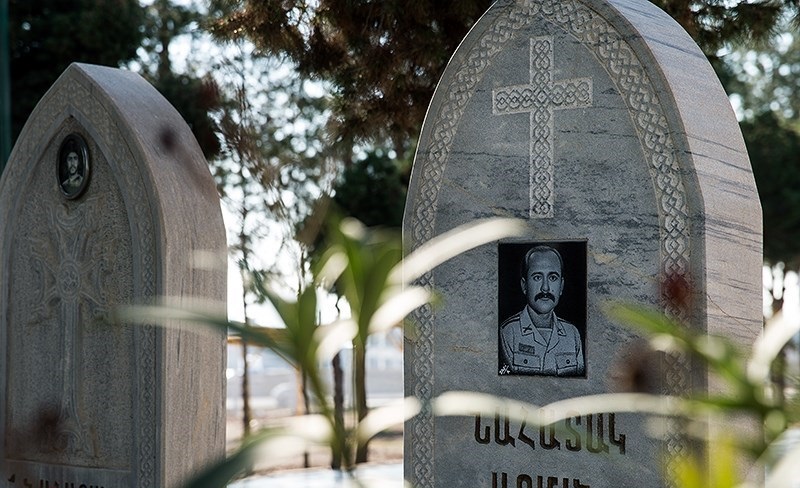
The ensuing war was bloody and prolonged. Fatalities of between 179,000 and 215,000 on the Iranian side alone were recorded.10 Razoux records an interview with General al Khazraji, Chief of Staff of the Iraqi armed forces 1987-88 confirming 125,000 Iraqi fatalities11. Statistics show a further 1.5million wounded or maimed. Not counting the numbers recorded as missing. Losses of materiel were extensive, amongst them 9,000 armoured vehicles, 1,650 artillery pieces, 950 aircraft and 30 warships, as well as 72 merchant ships caught in the crossfire.12
The war overturned the traditional balance of relations in the Middle East. The US’ clumsy handling of the Iraqi fighter attack on the USS Stark and the USS Vincennes attack on an Iraqi civilian airliner together with the blind eye turned to Iraq’s use of chemical weapons irreparably damaged Iran’s perception of the west. At the same time, the war turned a previously Iranophile West into its enemy. Ansari points to the reduction of Iranian “experts” available for foreign policy advice, a tendency in the intelligentsia to opt for Arabic over Persian, and a tendency, built on lack of understanding, to draw closer to Israel and to blame Iran wherever possible. Likewise, the threat of Islamic fundamentalism triggered a reduction in animosity between the Arab states and Israel as the realisation that the two shared a common enemy dawned. But the effect of the war on the two belligerents themselves went far deeper.
Iran’s population emerged from the war “shaken, reflective and determinedly anti war”.13 But for many the war was a success. The regime had survived without losing territory against a powerful neighbour with massive western support. From 1982 that opponent had even been on the back foot. Ansari calls it the beginning of a “new national narrative for Iran”, newly empowered, self-confident and restored with its dignity intact. Furthermore the war had seen a kind of balance achieved between autocracy and the democratic pluralism of Iran’s “instinctively rebellious and cosmopolitan society”. Persian nationalism had gained status at the expense of religion and Iranians felt themselves suddenly “citizens”, rather than subjects.
Bibliography
Karsh, Efraim. The Iran-Iraq War. Springer, 3 July 1989.
Shahram Chubin. Iran and Iraq at War. Routledge, 1 Mar. 2019.
Trita Parsi. Treacherous Alliance : The Secret Dealings of Israel, Iran, and the United States. New Haven, Yale University Press, 2008.
Yours sincerely,