
Like most, I came to writing by accident.
Divorce was the first real spur. My sojourn in that particular wilderness gave me a great deal to get off my chest. And sitting in the frigid interior of the yacht to which life had banished me, hammering away at the keys of an old laptop, hurling my prose at the fates, it was certainly a catharsis. But the volume of self-pitying poison I eventually produced is something I would rather forget.
The army helped me back onto my feet. Its routines threw an awkwardly avuncular arm about my shoulders, despatched me shivering in the bowels of vast aircraft to foreign climes. Hours spent in seats made of cargo netting, the roar of powerful engines drowning sensation, the dim gleam of the mobile phones entertaining the faces of fellow soldiers making for an eery backdrop to my thoughts.
Military intelligence is rarely the dark art Hollywood would like it to be. It is backstopped by uncomfortable beds, wearying hours and sometimes, in my case, time spent ferreting intelligence from the strangest of corners.
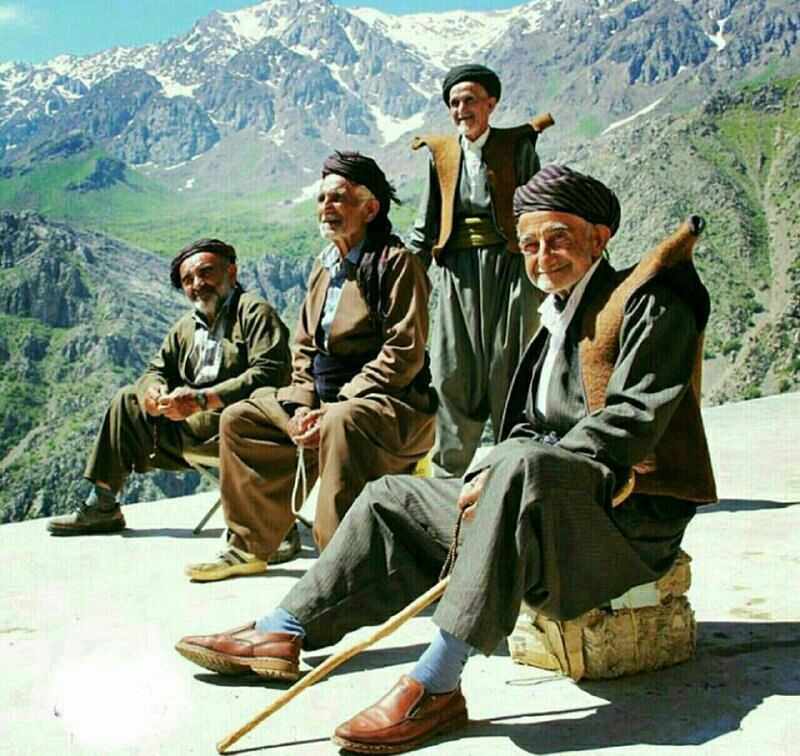
Nearly 5 tons and $300,000 of civilian armoured vehicle, the mud on its spattered flanks obscuring its bright white paint, its parked wheels akimbo on an uneven mud street in mountainous Kurdistan. The village is barely 100 miles from Iran. And for all the evidence of modernity brought to it by an ambitious developer on the eve of war, it is still ramshackle, third world. Its streets, grey and miserable in the light rain, are patrolled by dark faced men in the broad sashes and turbans of their tradition.
The vehicle’s occupants sit in a café a hundred yards down the street, deep in conversation with a local leader. He has intelligence on potential threats. Concealed in their waistbands are Glock 19 automatic pistols, a round in the chamber and Glock’s clever trigger mounted safety in complete control. Each carries a pair of fully loaded magazines and a personal locator beacon. Their mobile phones are loaded with secret technology. Just a short dash away in the vehicle’s boot, under a carelessly arranged blanket, lie two assault rifles and some 300 rounds of ammunition.
The meeting will be the basis of an intelligence report. It will be worked up in an ageing portacabin, the author propped against threadbare pillows leaning against a filthy wall. The space will be bedecked with clothes drying on makeshift clotheslines and weapons, made safe in special sand pits nearby, resting against what might be described as wardrobes. It will be structured within rigid guidelines. Its words will be carefully drained of emotion, of character, of beauty. They will be meticulously arranged, standing stiffly to attention, gleaming with military precision. Redolent with the urbanity the army likes to lend its prose. As dry as a Walkers crisp.
It was nonetheless writing. And it undoubtedly refined my craft, reinforced the basic mechanics. The all-important process of actually sitting down to write.
But something else struck me. The expensively up-armoured Toyota, and its heavily armed and technologically ascendant passengers were in stark contrast to the backdrop of a sleepy Kurdish village. It was a metaphor for Western Imperialism and international military adventurism and it sparked a powerful creative urge in me.
But I still had no idea how actually to write a story. That took a decade of trial and effort. And even when my best, most honest friends admitted that what I had laboriously produced was worth the read, it was still nowhere near good enough to impress that most discerning of audiences: the literary agent.
For success in that domain I needed something more substantive. I needed to be taught. And as luck would have it, I stumbled across a certain Mr David Baboulene and the awfully clever chaps at Dream engine...
Yours sincerely,