
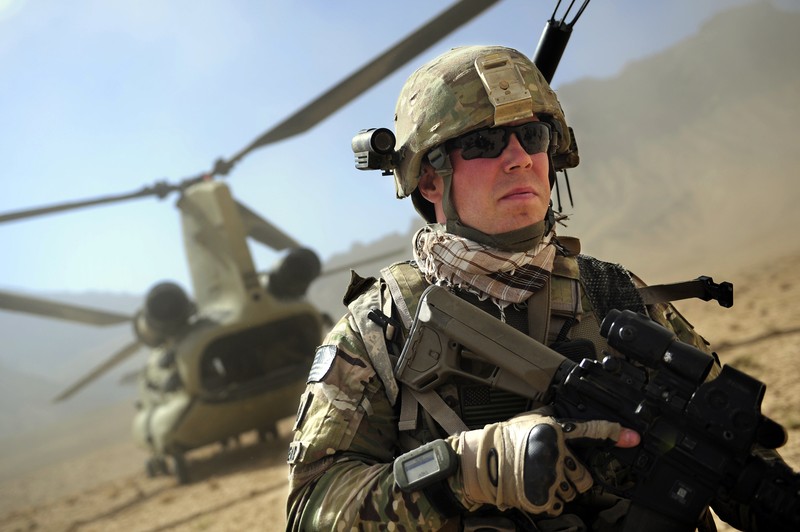
The aircraft was almost unbearably loud. A Chinook with the ramp half open and a loadmaster in a helmet with a mirrored visor staring wistfully into the desert. Engines that made any sort of conversation impossible. Ten of us on canvas seats, breathing the heady smell of fuel, thighs touching, rifles between our knees. The man across from me was reading a letter from home for the third time. Another was asleep. How he slept I do not know.
We were 90 minutes into a two-hour flight plan to Mosul. The devastated city had fallen strangely quiet recently. Quiet in the particular way that areas go quiet when something is being prepared. What was clear was that quiet did not mean safe.
I remember the colour of the light. The way a water bottle rolled with the movement of the helicopter and no one moved to stop it. I remember registering, with absolute clarity, that the conversation I had cut short that morning before we left might be the last one I would have with that person. Not as a thought. As a fact that arrived without announcement and declined to leave.
Twelve hours later we were back on the ground. Nothing had happened. The General had his meeting and nobody was any the wiser as to why. American food beckoned and, later, sleep came without difficulty.
But the clarity of that morning’s flight stayed with me.
Writing tutors talk about stakes. Raise the stakes, they say. Make the reader care. It is good advice imperfectly understood. Invented stakes - the ticking bomb, the threatened child, the terminal illness dropped into act two - are visible from a distance. The reader senses the mechanism. They can feel the writer's hand on the lever.
Real stakes feel different. They arrive in the body before they arrive in the mind. They make a water bottle rolling across a floor unbearably significant. They make the light a specific colour you can recall twenty years later. They make you register, mid-conversation, that the person you are talking to may be talking to a version of you that will not exist by morning.
You cannot manufacture that. You can only have been there, and let it be in the sentences whether you intended it or not.
David Baboulene told me early on that readers do not respond to events. They respond to consequence. I understood the words immediately and the meaning considerably later.
The book I am finishing knows the difference. I am not sure I had any choice in the matter.
More on that next time.
Yours sincerely,